We’re preparing for heavy rain
As part of Auckland Council's Making Space for Water programme, we work alongside Auckland Council’s Healthy Waters team to strengthen local streams and help our communities better prepare for heavy rainfall and flooding.
Our Stream Team is on the ground caring for waterways every day. We remove debris, dumped materials and overgrown vegetation that can block water flow, as well as maintaining previously restored sites through weed control and targeted native planting.
The Trust has identified three priority sites in the Ōtara-Papatoetoe Local Board area. Removing blockages and replanting at Papatoetoe High School, Kudu Road to Preston Road and Blampied Road will help prevent small issues from becoming bigger problems downstream.
Our mahi gives streams more space to flow safely, while restoring stream margins so they remain strong and stable over time.
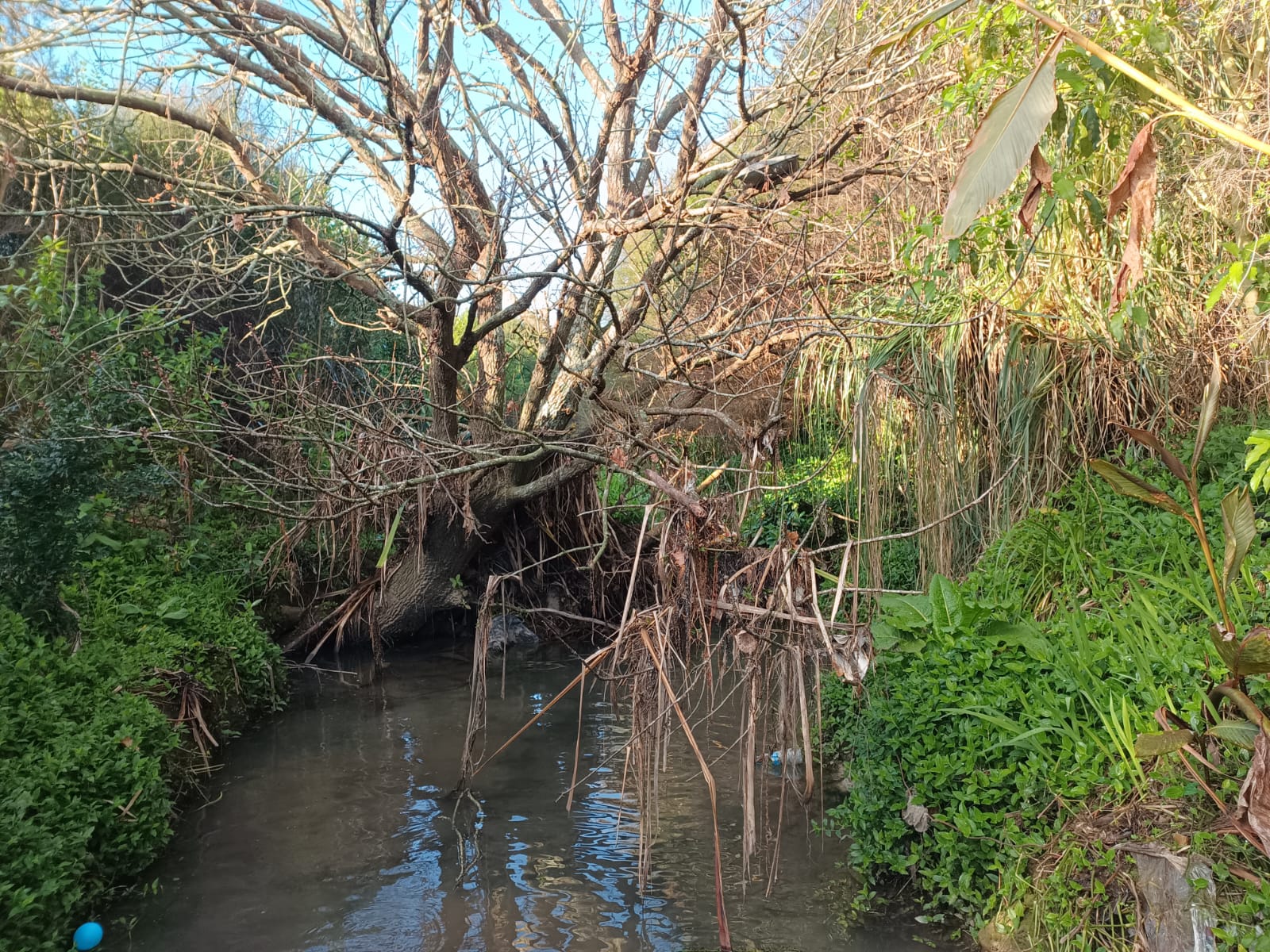
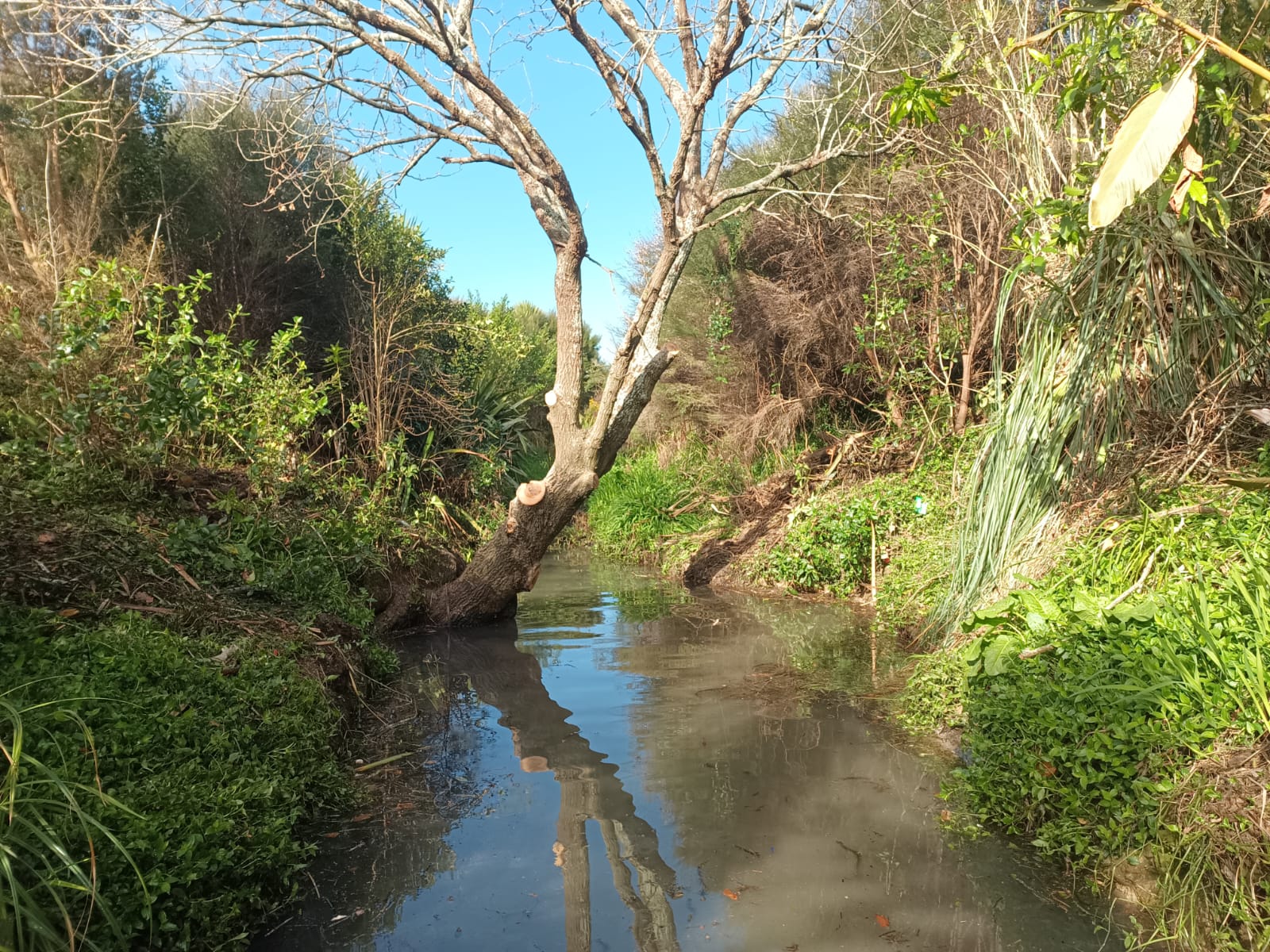
Before (left) and after (right) removal of vegetation and overgrowth blocking stream path
Why flood resilience matters
In recent years, communities in Tāmaki Makaurau have experienced first-hand the impacts of extreme weather. Healthy, well-maintained streams play an important role in keeping our neighbourhoods safer during heavy rain.
When waterways are clear and stream banks stabilised by native plants, streams can move more freely and handle higher velocity waters, reducing flood risks and damage to nearby homes. Replacing invasive weeds with deep-rooted native species helps slow fast-moving water, reduce widening floodplains and reduce erosion.
Uplifting the mauri of our waterways strengthens both ecological health and community wellbeing. Together, we are creating streams that are more resilient, safer, and better able to support people and nature as our climate continues to change.
.jpg)

Case study - Kudu Road to Preston Road
The Kudu Road to Preston Road stretch of Ōtara Creek is a narrow, flood-prone area that has been impacted by illegal dumping, invasive weeds and repeated storm damage. Steep banks and limited access made caring for this site especially challenging. In 2025, the Trust carried out staggered flood-resilience works to restore water flow, improve safety and prepare the area for long-term care.
Around 520 metres of stream corridor were strengthened through the removal of significant amounts of dumped waste and stream blockages. Invasive species were controlled, and 600 native sedges and grasses were planted to stabilise banks and support healthier waterways.
This lays the groundwork for ongoing restoration and a more resilient future for Ōtara Creek and the community.

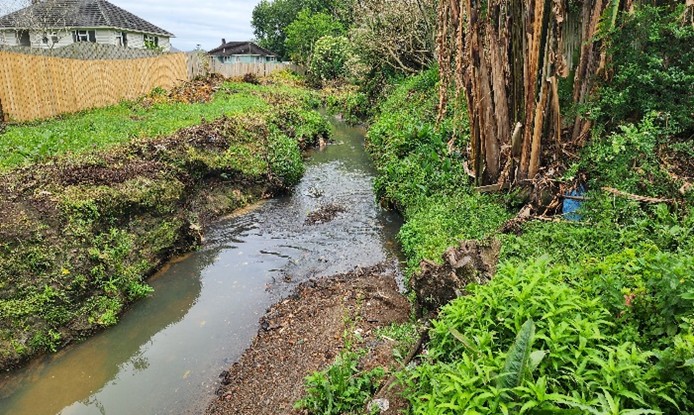
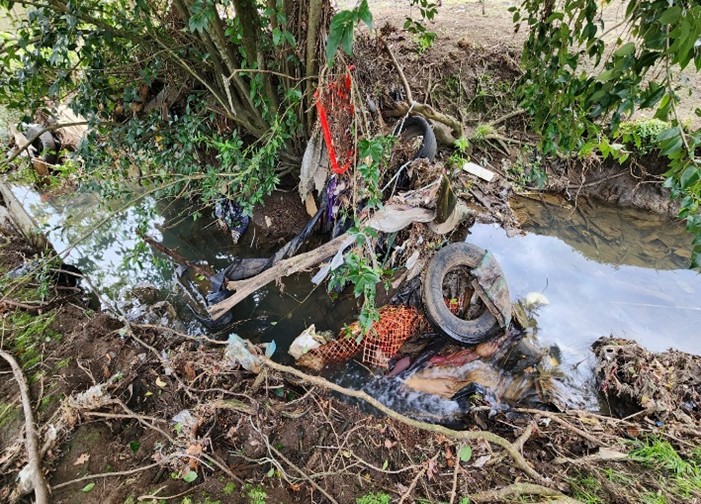
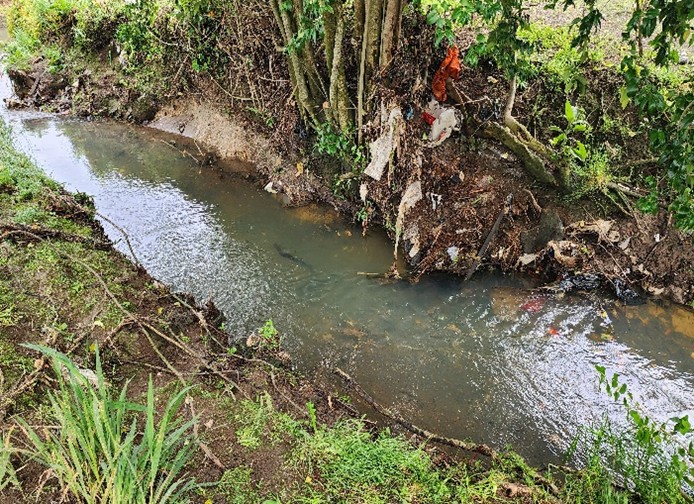
Before (left) and after (right) clean-up at Ōtara Creek, Kudu Road to Preston Road
We can all take steps to future-proof our communities
Flood resilience requires collective action. We work alongside local residents and across the wider Ōtara–Papatoetoe community to build understanding of flooding and waterways in the area, and to normalise conversations around flood resilience.
Our approach amplifies local voices and lived experience. We create welcoming opportunities for people from all walks of life to share their stories, learn together and take action through:
- Community and volunteer clean-ups days
- Practical workshops and displays at local venues
- Supporting people to report issues such as illegal rubbish dumping, flooding and blocked waterways
We listen to and record how locals interact with their waterways, how they are impacted by storms, and what the streams mean to them, using these insights to guide our work. Through creative and culturally responsive education, we share practical actions people can take at home (like keeping gutters and flow paths clear) alongside updates on our restoration progress.
.jpeg)

Left: Vasemaca Tavola with Sagisarah Sagatu, Community Program Specialist with a custom-made display for Ōtara Library, October 2025. Right: Volunteers from ASEZ WAO Young Adult Volunteer Group after a mega clean-up at the Kudu to Preston Road flood resilience site. Photo credit Vasemaca Tavola
Flood resilience is strongest when it is shared
Communities who understand their waterways are better prepared for heavy rainfall and flooding. Collective awareness about how people and streams are impacted helps break behaviours that increase flood risk, such as rubbish dumping and neglect of public waterways.
Encouraging shared knowledge and responsibility helps people reconnect with the waterways. Flood resilience is strongest when it is shared — between community, Council and the Trust — working together to protect families, homes and neighbourhoods now and into the future.
Click here to learn about small, practical actions we can all take to protect our families, homes, and community.
Visit Auckland Council's Flood Viewer to learn about where water flows near you.
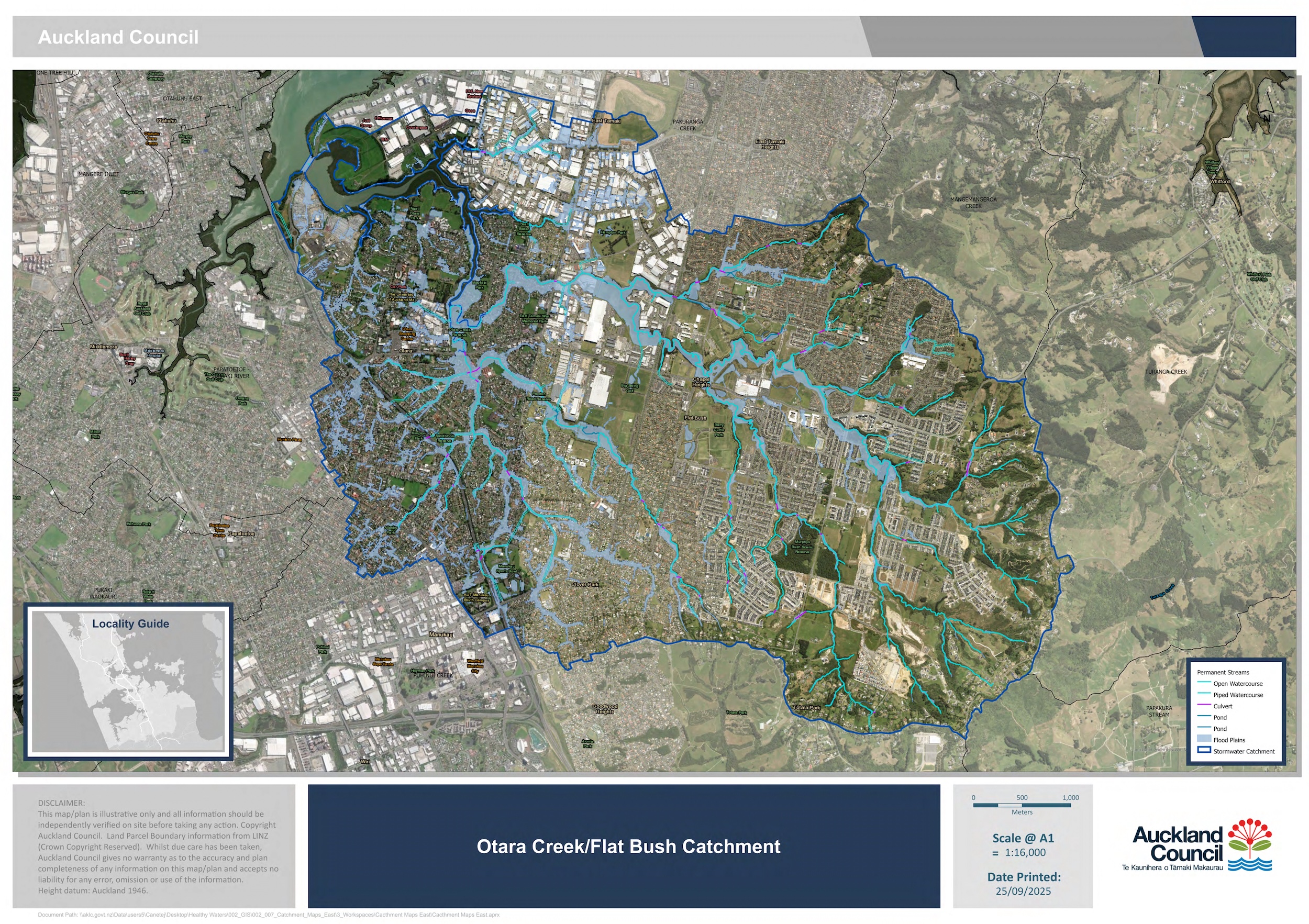
Auckland Council Flood Viewer overlay of the Ōtara catchment