Outsmarting pests and building love nests for native species
Reducing introduced predators and invasive plants is critical to restoring the balance of te taiao and creating safer habitats for native species to thrive. With the support of Ōtara-Papatoetoe Local Board and Auckland Council, our Pest Free Team manages dozens of trap and bait lines across 50 hectares of urban parks, reserves and waterways in the Ōtara-Papatoetoe local board area. We use a variety of tools, baits, and techniques to suppress introduced predators and limit reinvasion from surrounding areas.
We work with the community, local schools, and businesses to prevent the spread of introduced exotic weeds into areas our reserves and parks. Ongoing result and outcome monitoring helps determine the impact of our predator control.
Alongside pest predator and weed control, we support native regeneration by installing nesting boxes, wētā hotels and enhancing habitats that encourage birds and insects to flourish.
Together, our mahi strengthens biodiversity and helps revitalise the natural ecosystems that protect our waterways.


Our Pest Free Team assemble traps going out across the Ōtara-Papatoetoe region
In 2024–25, the Pest Free Ōtara-Papatoetoe programme was refreshed with a stronger focus on managed bait and traplines, while continuing to deliver community education and engagement. We have installed 234 traps and 73 bait stations. Since December 2024, we have trapped over 1,400 introduced predators, with more controlled through our managed bait stations. We focus on areas with high biodiversity value and significant remaining native bush, including Ōtara Creek, Tāmaki River, Puhinui Creek and Waokauri Creek.
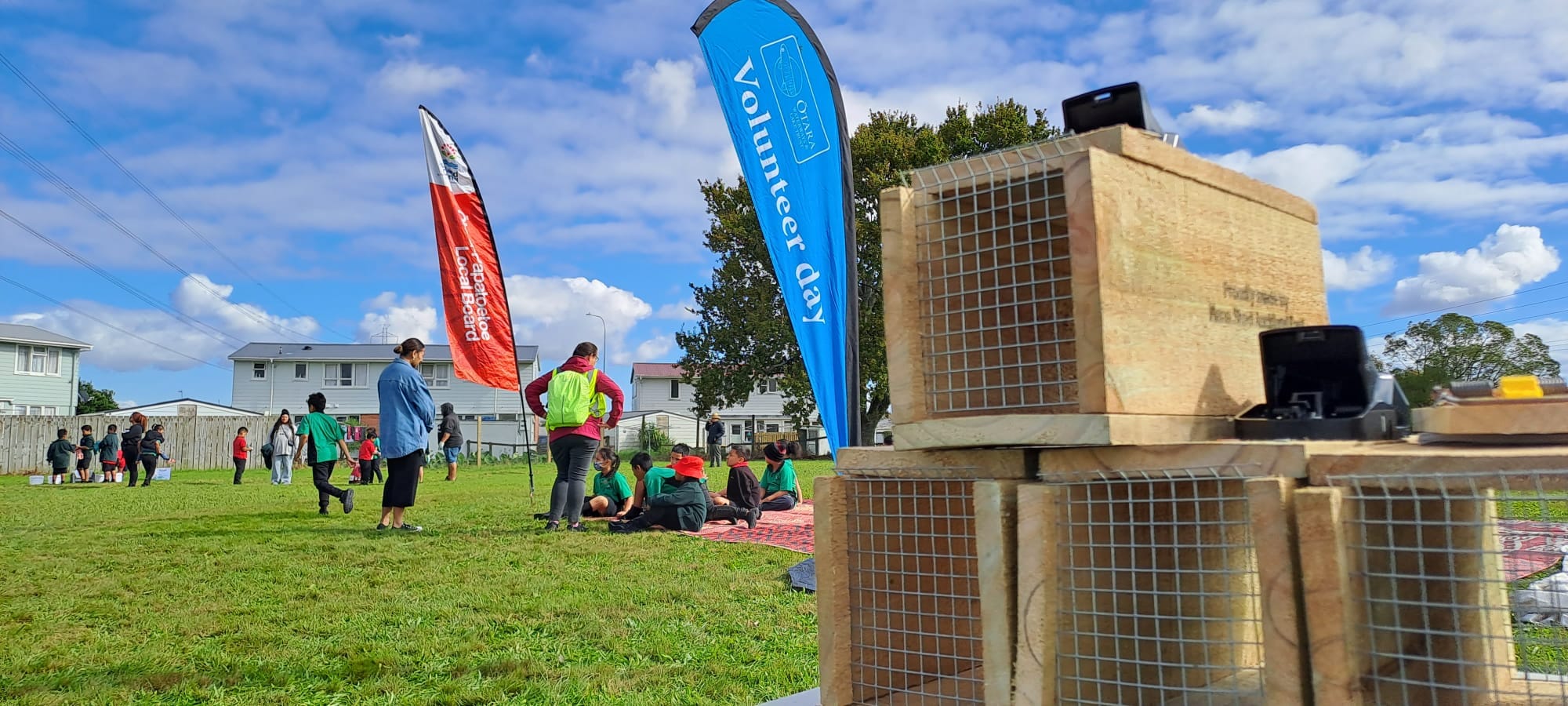
Restoring balance for our native animals and insects
Reducing predators such as brushtail possums, rodents, hedgehogs and mustelids (stoats, ferrets and weasels) protects our devastated native species that evolved in the absence of mammalian predators. By suppressing their numbers, we are helping create safer habitats for birds, reptiles, amphibians and invertebrates to thrive.
Restoring ecological balance is an investment in our long-term wellbeing, ensuring future generations can experience abundant native wildlife, resilient ecosystems and healthier neighbourhoods, reserves and workplaces.
Residents can support the effort by setting backyard traps, volunteering on trap lines, or donating traps to expand our reach.
Case study - Manukau Memorial Gardens
At Manukau Memorial Gardens, our Pest Free Team is working to protect native wildlife. With Auckland Council’s support, trapping began at the Gardens in May 2025. Since then, more than 150 possums and 100 rodents have been removed, easing predation and giving native species space to recover. Quarterly bird surveys are tracking changes in abundance and diversity, helping us measure the impact of our work and the site’s ecological revival.

Making a pest-free future together
Our Trust leads by example, showing what a pest-free future can look like by inviting our community to be part of it.
Through hands-on education and engagement in local hubs, we share practical conservation skills with schools, kura, kōhanga reo and residents. We support households in Ōtara-Papatoetoe to access free rat traps and guide local businesses who are keen to do their bit for reducing pest plants and animals on their property.
Our approach combines learning with action, from classroom sessions to on-the-ground trapping and monitoring. We celebrate our Pest-Free successes in the community, recognising the collective effort behind every milestone.


Our tamariki become kaiāwhina
Building pest-free knowledge within our community fosters pride, and everyday sustainable action starting in our own backyards.
Our students gain the skills to identify pest plants, monitor and trap introduced predators. They help protect biodiversity on their school grounds, and take these lessons home to their whānau. By empowering young people and residents alike, we nurture active kaiāwhina of our environment and create more resilient ecosystems for current and future generations.

Pest Free Activator Nick delivers a presentation at Papatoetoe Library
Case study - De La Salle College
Since 2025, the Pest Free Team has partnered with De La Salle College to restore a once-degraded stream running through the school grounds. Working alongside Auckland Council’s Sustainable Schools Team and Conservation Advisors, we support students with hands-on conservation learning that builds real-world skills and environmental leadership.
Students are actively removing pest plants, replanting and maintaining 200 metres of stream bank, and managing an on-site rodent and possum trap line. Through this practical work, they gain experience in humane predator control, ecological restoration and long-term care.
This partnership is growing the next generation of kaiāwhina, transforming the stream into a healthier habitat for native species and a lasting source of pride for the De La Salle College community.

Our Pest Free Assistant Jordan with Year 8 and year 11 young men from De La Salle College involved in weed and introduced predator control